
Harvey Fierstein's  Torch Song Trilogy

Harvey Fierstein's
Torch Song Trilogy

An aging drag queen and his attempts to connect with someone...anyone!!

By Harvey Fierstein
Directed by Tim Irving

Featuring Matthew Weeden as Arnold Beckoff, with Jill Drexler, Sidney Franklin, Barron Henzel, Amanda Sitton and Tom Zohar.

Show Summary

Diversionary presents “Torch Song Trilogy”

Diversionary production celebrates the 25th Anniversary of the award-winning Broadway production

Diversionary Theatre will present Harvey Fierstein’s Torch Song Trilogy as the third show of its 2007-2008 season. Running November 15-December 16, Torch Song Trilogy premiered on Broadway in June 1982, and went on to win the Tony Award for Best Play for that season, and a Tony Award for Best Actor in a Play for Mr. Fierstein. As much a reflection of the importance of family and love, Torch Song Trilogy is hailed as a classic comedy in Gay Theater. The play was one of the first Broadway shows to have a major gay theme in its plot. The 1988 movie version with Harvey Fierstein, Matthew Broderick and Anne Bancroft was also one of the first mainstream movies to feature homosexuality as its main theme. But the universal themes of finding self-respect, love and the importance of family is what has made this story a classic with both gay and non-gay audiences.

Diversionary’s production will celebrate the 25th Anniversary of this milestone event. Tim Irving will direct, and Matthew Weeden will play Arnold Beckoff, the role Mr. Fierstein wrote for himself. The cast includes Jill Drexler, Sidney Franklin, Barron Henzel, Amanda Sitton and Tom Zohar. The creative team includes: G. Scott Lacy (casting), David Weiner (set design), Bonnie Breckenridge (lighting design), Jennifer Braun Gittings (costume design), Amy Reams (properties), and Chris Powell (stage manager).

At the height of the post-Stonewall clone era, Harvey Fierstein challenged both gay and straight audiences to champion an effeminate gay man's longings for love and family. His creation, Arnold Beckoff, was a fully realized character who had an active sex life, a tragic love story, and a gay teenage foster son. Arnold, a professional drag queen, in pre-AIDS New York, faces three important challenges: searching for love, wrestling with love’s complications, and defining “family” for a Jewish, gay man.

Torch Song Trilogy was originally performed as three separate one-act plays. The first play, The International Stud, introduces Arnold, a Jewish female impersonator who is struggling to find love with bisexual schoolteacher Ed. Fugue in a Nursery ensues in the second play after Ed leaves Arnold for girlfriend Laurel – the setting is a weekend country house where chaos breaks out when Arnold introduces his new, young, model-boyfriend Alan to Ed. The final play, Widows and Children First! brings Arnold face-to-face with parenthood with an adopted son and the only thing that really scares Arnold: the impending visit from his mother.

The Little Theatre hosted the Broadway run for 1,222 performances. The play won Fierstein two Tony Awards, for Best Play and Best Actor in Play, two Drama Desk Awards, for Outstanding New Play and Outstanding Actor in a Play, and the Theatre World Award. The play's critical and commercial success led directly to the musical La Cage aux Folles, with its book by Harvey Fierstein. In 1988, Fierstein adapted his play for a feature film directed by Paul Bogart. New Line Cinema insisted he restrict the film to a running time of two hours, which necessitated copious excisions. Fierstein regressed the time frame to a decade earlier than the play in order to justify his decision not to make mention of the AIDS epidemic at a time when it was very much a part of the public's awareness.

In a November 2002 article in The Advocate, playwright Charles Busch reflected on the 20th Anniversary of the Broadway production. “Mainstream acceptance of the uncompromising Torch Song Trilogy allowed aspiring gay playwrights to no longer feel foolish fantasizing that their work might one day be produced on a Broadway stage. Harvey Fierstein's play gave the public a vision of gay life that was outrageous yet completely accessible. And it gave all of us gay people toiling in the theater the possibility of unlimited dreams. Audiences found themselves sympathizing with a gay man mourning the death of his lover. Torch Song paved the way for all the plays that shortly afterward would explore the scourge of AIDS in the gay community. Two decades later, television's Will & Grace, with its cozy middle-class depiction of campy gay characters, can trace its ancestry to Arnold Beckoff and company.”

Torch Song Trilogy marks director Tim Irving’s eleventh outing with Diversionary Theatre. His past shows include The Rocky Horror Show, Jeffrey, The Most Fabulous Story Ever Told, the highly received revival of Boys In The Band, the musical Falsettos, Valhalla, and both productions of Love! Valour! Compassion! Torch Song Trilogy marks two special anniversaries for Irving. Ten years ago he played the musical theatre loving Buzz in Diversionary’s first production of Love! Valour! Compassion!, directed by Sean Murray. Twenty years ago he played the part of Arnold in the San Diego premiere of Torch Song Trilogy at the North Coast Repertory Theatre.

Diversionary Theatre was started in 1986. The mission of the theatre is to produce plays with gay, lesbian, bisexual and transgender themes that portray characters in their complexity and diversity both historically and contemporarily.

Torch Song Trilogy is the third show of Diversionary Theatre’s 2007-2008 season, and will preview on Thursday and Friday, November 15 and 16, and open on Saturday, November 17 and run through Sunday, December 16. Due to the length of the play, earlier performance times are: Thursday at 7:00pm, Friday and Saturday at 7:30pm, Sunday at 2:00pm, and a Wednesday, November 28 performance at 7:00pm (the Wed. performance replaces the previously announcded Monday, November 26 performance).

Single tickets are now on sale. Tickets are $31 for Thursday, Sunday and Monday performances, $33 for Friday nights and $35 for Saturday nights, with a $4 discount for students, seniors 60+ and active military. Tickets for opening night will be $45 and include a post-show cast party, which will be hosted by Philip m Katcher.

Groups of 10-29 receive a $4 discount, and groups of 30+ receive an $8 discount. For tickets or information, call the Diversionary box office at 619.220.0097 or log on to www.diversionary.org.

- END -

The City of San Diego Commission for Arts and Culture provides major support for Diversionary Theatre.

Creative Team

headshot headshot headshot headshot
Matthew Weeden Jill Drexler Sidney Franklin Barron Henzel
  headshot headshot  
  Amanda Sitton Tom Zohar  

Press Photos

Photo Photo
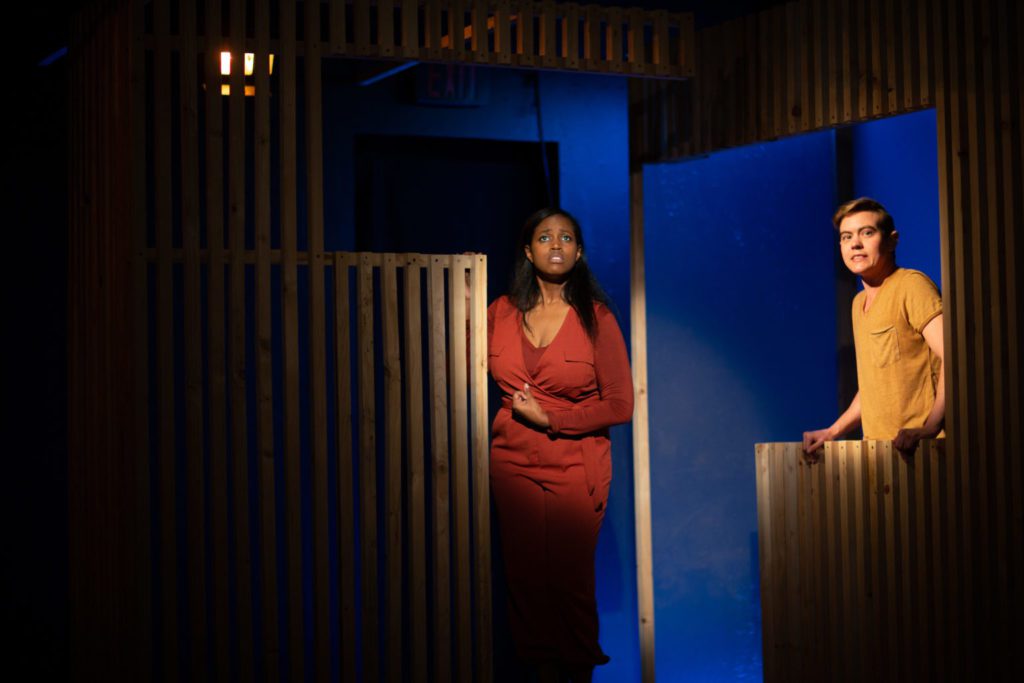
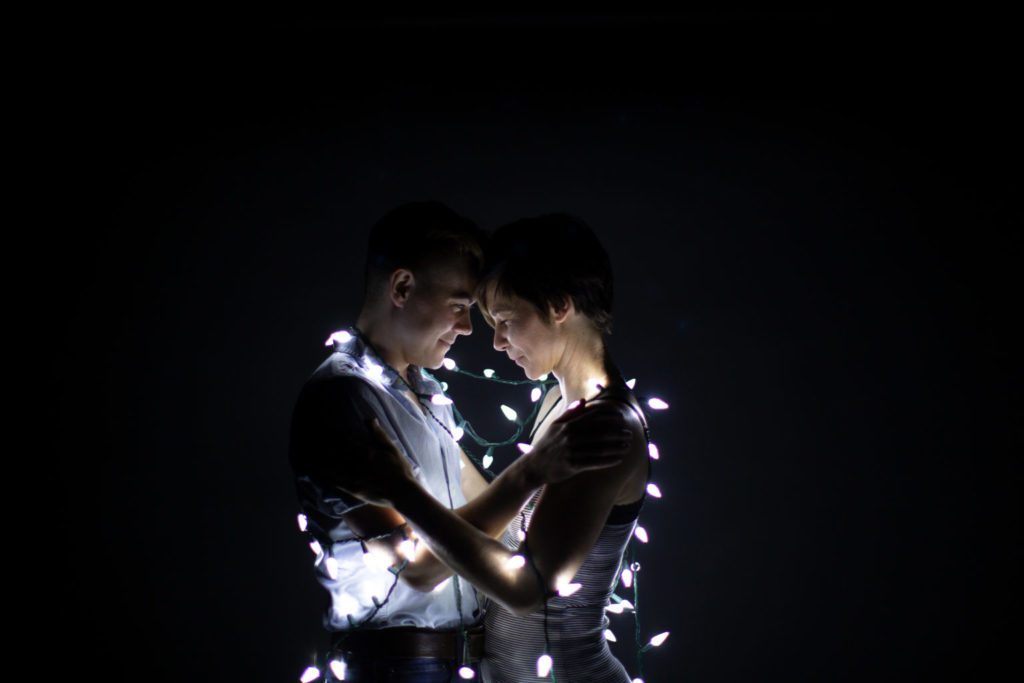
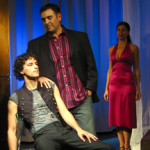
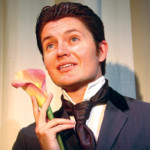
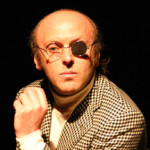
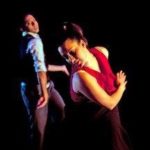
Harvey Fierstein's Torch Song Trilogy featuring Matthew Weeden as Arnold Beckoff. Harvey Fierstein's Torch Song Trilogy featuring Matthew Weeden and Jill Drexler.
Photo Photo
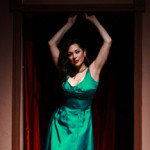
Harvey Fierstein's Torch Song Trilogy featuring Matthew Weeden and Tom Zohar. Harvey Fierstein's Torch Song Trilogy featuring Jill Drexler and Matthew Weeden.
Photo Photo
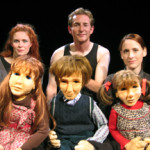
Harvey Fierstein's Torch Song Trilogy featuring Sidney Franklin and Matthew Weeden. Harvey Fierstein's Torch Song Trilogy featuring Barron Henzel, Tom Zohar and Matthew Weeden.
Photo Photo
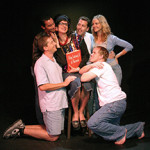
Sidney Franklin, Matthew Weeden, Barron Henzel and Amanda Sitton in Harvey Fierstein's Torch Song Trilogy. The cast of Harvey Fierstein's Torch Song Trilogy. Amanda Sitton, Barron Henzel, Sidney Franklin, Jill Drexler, Tom Zohar and Matthew Weeden as Arnold Beckoff. Not pictured Amy Dalton.

Reviews

La Jolla Village News
Carrying the ‘Torch’
STAGE PAGE
Charlene Baldridge
December 13, 2007

?By now, theatergoers have heard that Diversionary Theatre’s production of Harvey Fierstein’s “Torch Song Trilogy” is four hours long. That is true. It was that long on Broadway when Fierstein copped the 1983 Tony Award for play and performer. Next?

They’ve also heard that the production, playing through Dec. 16 at Diversionary’s intimate theater in University Heights, is excellent and worth the posterior wear and tear. That is also true. The ensemble is as fine as that of any “Torch Song” in this writer’s experience, and it’s certainly among the best productions in Diversionary’s oeuvre.

One wishes they had thrown another thousand dollars at David Weiner’s well-designed sets — the crew works efficiently to make scene changes during two 12-minute intervals — but Jennifer Brawn Gittings’ costumes, especially Arnold’s glittery, feathered drag queen outfit, are fine. So are the other production elements, including director Tim Irving’s sound design, Bonnie Breckenridge’s lighting and Amy Reams’ droll props.

Think of the play as the shortest opera in Richard Wagner’s Ring Cycle. Truly, those rumors that it feels like three hours are true. The trilogy, at first staged individually off-off- and off-Broadway, is in a sense Fierstein’s Ring. They have all the elements of tragedy: unfeeling lovers that flee what they love and fear most, a mother from hell and a wounded wife. Because Fierstein is the author, the story is rife with equal doses of laughter and pathos, and the plot ends poignantly yet hopefully. Set in New York City, the play was written prior to the era of AIDS, and though certain props and topical references are updated, nothing of that tragedy is even spectral except in viewers’ minds. Representing the human family, a mix of male and female, gay and straight, old and young composed the sold-out-to-the-walls audience Sunday, Nov. 25. There were tears, laughter and, at the curtain call, a loud standing ovation.

Arnold Beckoff (the Fierstein role, stunningly played by Matthew Weeden) is a successful drag entertainer. One night after his show he meets Ed (the excellent Barron Henzel) and takes him home. Though he loves Arnold in his fashion, Ed is in truth a bisexual simultaneously involved with Laurel (Amy Sitton), something that sends the volatile Arnold into a tizzy.

Honest Ed tells Laurel, now his fiancee, about his affair with Arnold, and she insists they invite Arnold to their country home for the weekend. Ed is consumed with jealously when Arnold brings along his new young boyfriend Alan (gorgeous Sidney Franklin). In the uproariously staged second act, all appear to be in a gigantic bed together (they are not, at least not all together).

The mother from hell (Jill Drexler) appears in Act III and when she meets Arnold’s adopted teenage son (Tom Zohar) and Ed, estranged from now-wife Laurel, the homophobic mom wrongly assumes a menage a trois. Fierstein doesn’t shrink from writing explosive scenes during which long-hidden suspicion, anger and even love become apparent.

The ensemble, an ensemble in every sense of the word, is up to every moment, every nuance of Fierstein’s deeply compassionate play. To miss the experience and Matthew Weeden’s eyes would be a pity.


Curtain Calls
By Pat Launer
November 30, 2007

Carrying a Torch

THE SHOW: Torch Song Trilogy, the groundbreaking 3-act dramedy by 4-time Tony winner Harvey Fierstein (this play gave him his first two Tonys: for Best Play and Best Actor). The Broadway production opened in 1982 and ran for more than 1200 performances. In 1988, Fierstein adapted his work for a film, in which he also starred. The movie was set a decade earlier than the play, in order to avoid mention of AIDS during the peak of the epidemic. The film cast included Anne Bancroft and Matthew Broderick.

THE STORY: The title relates to the diehard romantic whose soul and fatalism derive from the 1920s ballads he adores. The three acts of the play were set in 1971, 1973 and 1980. The Diversionary productions moves the time forward, to 2001, 2002 and the present. In “International Stud,” Arnold meets bisexual Ed and falls in love, but then Ed goes off and marries a woman. “Fugue in a Nursery” finds Arnold with Alan, the love of his life. They settle down and arrange to adopt a child together. Then tragedy darkens their lives. In “Widows and Children First!,” Arnold’s mother shleps up from Florida and comes face-to-face with Arnold’s gay teenage son.

THE PLAYERS/THE PRODUCTION: Twenty years ago, Tim Irving played Arnold Beckoff, the Fierstein’s lovable drag queen. Having evolved into one of the county’s best comic directors, Irving maintains his magnificent sense of comic timing, and leads his extremely capable cast through the ups and downs, one-liners and lulls of this nearly four-hour epic. The show moves at a quick clip and never really sags or lags. Irving’s direction is sprightly and imaginative (the 4-person bed scene is particularly enjoyable).

Stepping into Harvey’s oversized shoes isn’t easy. But Matt Weeden (above), at 27, Harvey’s precise age when he wrote and starred in the play, hits his comic marks and really nails the pathos of this bittersweet life and character. His sad eyes tell a tale all their own. He even gets a chance to sing (he’s a graduate of the SDSU MFA program in musical theater), and his vocal chops, honed during scads of performances in Forbidden Broadway, here and in New York, arereally good. Of course, he doesn’t have Harvey’s sandpaper rasp of a voice (who does?), which is referred to several times in the play. But Weeden is delightful and charismatic throughout. And he’s surrounded by a strong ensemble.

Barron Henzel is always totally natural and believable. As the confused bisexual, he strikes a very honest note. Sidney Franklin is beautiful as the model, Alan, with an irresistible twinkle in his eye and a good ear for sarcasm (though he could work on his rate and diction). Amanda Sitton is deliciously passive- aggressive, annoying and acerbic in the small role of Ed’s ‘other lover,’ who baits and envies Arnold. Jill Drexler (Left with Matt) continues her string of funny performances as an overbearing, insensitive Jewish Mama; she totally captures the comedy (even if she wasn’t to the manna born). Tom Zohar is terrific as the adopted adolescent, David, a smartass who’s sometimes quite wise.

The set (David Wiener) is nicely and rapidly varying, and the costumes (Jennifer Brawn Gittings) are just right. Except perhaps for the ‘back-room’ bars that proliferated in New York in the ‘70s, playgrounds for anonymous sex, the play could’ve been written yesterday. It’s aged very well, and updates equally effectively. The issues haven’t changed; gay men (drag queens or not) still search for true love and a settled family life. Mothers still don’t understand their children’s lifestyles (gay or not). There’s still gay-bashing galore. And the emotional tone, however comic, is still darkly, sadly true. There’s a lot in the play, besides one-liners, to like and ponder and enjoy. Don’t miss this production.

THE LOCATION: Diversionary Theatre, through December 16

BOTTOM LINE: BEST BET

'NOT TO BE MISSED!' (Pat’s Picks)
Torch Song Trilogy – sad and funny, sentimental and heartrending. Excellently acted and directed. Diversionary Theatre, through December 16


SanDiego.com
"Torch Song Trilogy" at Diversionary Theatre
By WeltonJones
Posted on Nov 17 2007

Watching Tim Irving’s splendid, graceful revival of Harvey Fierstein’s “Torch Song Trilogy” at Diversionary Theatre inspires much more than just wonder at how far we’ve come in a quarter century.

What once was seen as a landmark in the emergence of homosexual culture into the everyday mainstream can now be appreciated in addition as a rich, engaging tapestry of life among us humans. The gay milieu can now be seen as the vehicle, not the payload itself. People treat each other this way regardless of the specifics.

These are frightfully real people, unsure of what they really want or how to get and keep it; stunned by the massive doses of irony and paradox dumped into their lives; exhausted by snatching at fleeting possibilities; alarmed at the deadly contradictions plucking at their spirits...

Intimidated and stimulated by the need to live.

Fierstein wrote the central character of Arnold Beckoff – professional drag queen and hopeless romantic – for himself and he played it for years in what were essentially three separate one-act plays, drawn together for the epic trilogy which spanned the dawn of AIDS.

Tim Irving introduced the role to San Diego audiences over 20 years ago and the present production is a testament to the layers of artistic sensitivity Irving has developed in the ensuing years.

He makes one bad decision – more on that directly – then steers his remarkable cast to a matched set of precision performance gleaming with truth and humanity.

Matthew Weeden is Arnold now, a smoothly consistent actor with as sure a sense of pose as you’re likely to find anywhere. I can’t remember a fragment of the overdone in his performance, which is more than can be said for my memory of either Irving or Fierstein himself.

Barron Henzel, as Arnold’s waffling bisexual fall-back position, is shifty with the ambiguities but engaging and warm with the nice moments. Amanda Sitton is painfully, gallantly real as the natural mommy-wife being battered into neuroticism by a taste for men of uncertain sexual orientation.

The other three characters are idealized stereotypes, the impossibly beautiful young lover, play with spunk and frank sweetness by Sidney Franklin; the quick-witted, at-risk, underage, boy-toy street hustler assigned by the courts as foster son to Arnold, played with perhaps too much bright energy but undeniable charm by Tom Zohar; and Arnold’s mom, deep in generational denial and hopeless loathing, played by Jill Drexler with a steely and most commendable refusal to back off and go saccharine.

Designer David Weiner (scenery) and Bonnie Breckenridge (lights) are sorely taxed in Diversionary’s limited technical universe by the play’s elaborate demands, but nothing is lost, thanks to Irving’s wise decisions on what part and how much of Fierstein’s visions to actually employ.

(In the second act, subtitled “Fugue in a Nursery,” the author asks for slide shows but Irving blithely substitutes, “ta-da!” entrances for each character, which works better anyway.)

That false note mentioned earlier largely remains only that: a note in the program that the first act – “International Stud” – takes place in 2001, the second in 2002 and the third – “Widows and Children First!” today.

No they don’t! If ever a play was of its specific time, it’s “International Stud,” with its endless talk – and even notorious depiction – of casual backroom coupling, the sort of thing which disappeared in panic with the beginning of the AIDS epidemic in 1981.

“Fugue” opened at La Mama in early 1979 and “Widows and Children” followed that fall. The show didn’t make it to Broadway until 1982, but Fierstein had been doing “Stud” off-Broadway as early as 1976.

“Torch Song Trilogy” is, among other things, a historic document of an era gone forever. Inserting cell phones and video games, substituting Ophra Winfrey for Tom Snyder: this is just silly, pointless tinkering. Let Jennifer Brawn Gittings do the costumes a la 1979 and this show would mean even more than it does, which is plenty.

With this production, Diversionary Theatre not only celebrates its 20th anniversary with dignity and pride but also has itself a hit.


North County Times
Tuesday, November 20, 2007

Ageless 'Torch Song Trilogy' is well-staged at Diversionary
By: RANDY DOTINGA - For the North County Times

Listen to a bunch of classic torch songs and they may set your iPod on fire. Unrequited love has that kind of effect.

Back in the early 1980s, a gravel-voiced actor named Harvey Fierstein had just those tunes in mind when he conjured up a Tony-winning play about sex, love and one-liners.

A quarter-century later, the "Hairspray" star's "Torch Song Trilogy" masterpiece holds together beautifully in a sterling production at San Diego's Diversionary Theatre. Updated only slightly for the 21st century, the play remains a touchstone for gay men and a delight for anyone else, just as moving, funny and thoughtful as it was 25 years ago.

While it boasts several fine performances, the Diversionary's version belongs to impressive lead actor Matthew Weeden, who finds the self-loathing, love-starved and heartbreakingly fragile soul in Arnold, a young man who needs "reassurance on the hour ---- every hour."

To steal a line from "All About Eve," Weeden's Arnold is maudlin and full of self-pity. He's magnificent.

He's also got quite a mess on his hands. He (maybe) loves Ed, who (maybe) loves Laurel and also (maybe) loves Arnold. Follow the lines and you'll figure out why the American Institute of Bisexuality co-sponsored this production.

Arnold ends up intertwined in everyone's lives while belting out torch songs (he's a drag queen performer, after all) and coping with a mother who would scare Mommie Dearest herself (framed in a movie poster on the wall).

Someone, perhaps Fierstein himself, has added a few modern-day references to the play, including Paxil, Rachael Ray and e-mail.

They're nice, but the play doesn't need them. "Torch Song" remains bracingly modern and remarkably perceptive about gay men, their lovelorn lives and their addiction to victimhood.

There are a few hitches, most notably a couple uninspired performances and the marathon length of the play. At more than four hours, it's a bit butt-numbing even with a couple of intermissions and decent pacing.

Unfortunately, director Tim Irving's static production doesn't allow for much physical comedy outside of a raunchy bar backroom interlude, while the possibilities raised by a gloriously gigantic bed in Act Two are mostly unrealized. Somewhere in "Torch Song Trilogy" is a madcap comedy straining to break free.

Among the supporting cast, up-and-comer Tom Zohar brings a funny physicality to his role as a teenage boy who enters the main character's life late in the third act.

Jill Drexler, meanwhile, is a treat as Arnold's Jewish mother, who runs the gamut from passive-aggressive to just plain aggressive and could easily become a caricature in the hands of a lesser actress.

Drexler gives her some true pathos as a tradition-bound mom who loves but doesn't like her gay son (or is it the other way around?).

Amanda Sitton, a familiar face at the Diversionary, is funny and savvy as poor Laurel, the woman who never met a gay man she didn't want to bed.

Nobody onstage, however, has as much to do as Weeden, who must sing, wear a glittery gown, canoodle with a hot young thing and sling wisecracks, all while nursing emotional wounds without becoming pathetic.

Ultimately, the main character transcends his queenly personas (drama and drag versions) to become more worthy of the love he wants so badly. We should all be so lucky.