
Bluebonnet Court

Bluebonnet Court

Show times:
Thursday at 7:30pm
Friday & Saturday at 8:00pm
Sunday at 2:00 & 7:00pm
and Monday, March 31 at 7:30pm

Thursday, Sunday and Monday performances: $29
Friday performances: $31
Saturday performances: $33

TALKBACKS with Playwright Zsa Zsa Gershick:
Sunday, March 23 after both performances
Sunday, March 30 after 2pm performance
Monday, March 31 after 7:30pm performance
Sunday, April 6 after 2pm performance
Saturday, April 12 after 8pm performance
Sunday, April 13 after 2pm performance

Previews: Thurs. and Fri., March 20 & 21 - all tix $20

Opening night: Saturday, March 22 - all tickets $45 includes post-show cast party hosted by Bill McClain & Bob Leyh

Super Sunday Matinee subscribers:
Sunday, March 23 at 2:00pm

First Nighter subscribers:
any performance March 20-21, 23-31

Student Rush: $10.00 tickets for students w/ID starting one hour before curtain.

Please ask for the discount at time of purchase.

Bring a Group and Save! Groups of 10+ /$4.00 off each ticket Groups of 30+/$8.00 off each ticket

Show Summary

It was spring, 1944. Wartime. And a wisecracking New York reporter was on her way to Hollywood and a secret tryst with one of MGM’s hottest starlets. An accident outside of Austin. No Jews. No Coloreds. No Queers. Welcome to Texas!

Diversionary Theatre and Moxie Theatre present Bluebonnet Court

Diversionary Theatre and MOXIE Theatre will jointly present the second full production of Zsa Zsa Gershick’s award-winning play Bluebonnet Court from March 20-April 13 at Diversionary Theatre. Set in 1944, against the backdrop of World War II and the waning days of Hollywood’s glamour era, Bluebonnet Court is a play about sex, civil rights and finding family in the most unusual places.

Winner of the 2007 GLAAD Media Award for Outstanding Los Angeles Theatre and two NAACP awards for theatrical excellence, Bluebonnet Court earned critical acclaim from Variety, the L.A. Times, The Advocate, L.A. Weekly and The Jewish Journal.

Diversionary’s Executive & Artistic Director Dan Kirsch saw the play during its sold-out premiere run in Los Angeles in 2006, and knew it would be a perfect Diversionary/MOXIE co-production. The production will be directed by MOXIE’s Artistic Director, Delicia Turner Sonnenberg.

“Zsa Zsa’s play does the impossible,” says Sonnenberg. “It tackles important issues like race, religion and sexuality all within the context of a delicious forbidden romance. It’s sexy, funny and heartbreaking at the same time. Plus, MOXIE and Diversionary have assembled an all-star cast of actors San Diego has probably never seen on stage together at one time. What more can you ask for in production?”

The cast features Chris Buess, Monique Gaffney, Jo Anne Glover, Lisel Gorell-Getz, Fred Harlow, Leigh Scarritt and Wendy Waddell. The creative team includes: Joel Daavid (set design, winner of the Lifetime Achievement Award from the L.A. Drama Critics Circle) and Jennifer Brawn Gittings (costume design). The production is underwritten in part by Joann Clark.

In this multi-racial dramedy, wisecracking Hearst "sob sister" Helen Burke (nee Berkowitz) is on her way from Manhattan to Hollywood and a coveted spot as an MGM contract writer. When she’s waylaid on the outskirts of Austin, Texas, it’s more than her car that gets an overhaul. Bluebonnet Court explores aspects of American culture that remain deeply troubling – very much alive – and difficult to confront. Racial intolerance, anti-Semitism, homophobia, and a general fear of the “other” remain pervasive, particularly during times of war. Beneath a comic veil, the play highlights questions that remain relevant to contemporary audiences: What does it mean to be true to oneself? How do people create community? And how and when do we reveal who we are when it’s dangerous to do so?

Critics have been unanimous in their praise of Bluebonnet Court. "The play offers real wit and a disarming sensuality. With a … sweet summer romance, Bluebonnet Court is a might cozy place to spend the night." - “RECOMMENDED” L.A. Times. “Well written, funny and moving.” –Variety. "Sassy and surprising, Zsa Zsa Gershick's 'Bluebonnet Court' tells a World War II-era lesbian love story that grabs the heart and holds on tight." - The Advocate. "Zsa Zsa Gershick's comedy-drama about lesbians connecting in an unlikely corner of Texas in 1944 is full of surprises." - "GO" L.A. Weekly. "Magnificently compelling. There is comedy, pathos, despair, and anger, not to mention sexual tension - in short, it has all the trappings of a long term monster hit. A true classic." - "PICK OF THE WEEK" Reviewplays.com

Playwright Zsa Zsa Gershick is the author of Secret Service: Untold Stories of Lesbians in the Military (Alyson, 2005), recently featured on C-SPAN’s “Book TV.” Secret Service was a 2005 NPR Summer Reading Pick, and is the 2006 winner of ForeWord Magazine’s Best Gay & Lesbian Nonfiction Book of the Year Award. (ForeWord Magazine is the Publisher’s Weekly of independent publishers and booksellers.)

Gershick’s earlier book, Gay Old Girls (Alyson Books, 1998), was winner in 1999 of ForeWord Magazine’s Best Gay & Lesbian Nonfiction Book of the Year Award, finalist for the Lambda Literary Award, and nominee for the American Library Association’s Best Gay & Lesbian Book Award. Her screenplay “Rozzie & Harriet” (co-written with Marion Levine) was a 1999 Los Angeles OutFest finalist. Her bylined work has appeared in Newsweek, the Advocate and the Texas Observer, among other publications.

A former newspaperwoman, Gershick holds a master’s degree in non-fiction writing from the USC Master of Professional Writing Program, where she also has taught, and an MFA in playwriting from the USC School of Theatre. She is a graduate of the U.S. Army Defense Information School (DINFOS) and served in the U.S. Army Reserve.

Diversionary Theatre was started in 1986. The mission of the theatre is to produce plays with gay, lesbian, bisexual and transgender themes that portray characters in their complexity and diversity both historically and contemporarily.

MOXIE Theatre’s mission is to expand the idea of what is feminine by using the intimate art of theatre to create more diverse and honest female images for our culture. MOXIE Theatre began its first full season in October 2005 bringing the community theatre that is smart, sexy and surprising - Theatre for women and the men who love them!

Bluebonnet Court is the fifth show of Diversionary Theatre’s 2007-2008 season and the third show of MOXIE Theatre’s season, and will preview on Thursday and Friday, March 20 and 21, and open on Saturday, March 22, and run through Sunday, April 13. Performance times are: Thursday at 7:30pm, Friday & Saturday at 8:00pm, Sunday at 2:00 & 7:00pm, and a Monday, March 31 performance at 7:30pm.

Talkbacks with the playwright will be held after several performances. Please call the box office for updated information.

Single tickets are now on sale. Tickets are $29 for Thursday, Sunday and Monday performances, $31 for Friday nights and $33 for Saturday nights, with a $4 discount for students, seniors 60+ and active military. Tickets for opening night will be $45 and include a post-show cast party.

Groups of 10-29 receive a $4 discount, and groups of 30+ receive an $8 discount. For tickets or information, call the Diversionary box office at 619.220.0097 or log on to www.diversionary.org or www.moxietheatre.com.

- END -

The City of San Diego Commission for Arts and Culture provides major support for Diversionary Theatre

Creative Team

Headshots not available for this cast. Please see "Press Photos" in the tab above.

Press Photos

Photo Photo
Pictured l-r: Lisel Gorell-Getz, Wendy Waddell and Fred Harlow. Photo credit: Coast Highway Photography. Pictured l-r: Leigh Scarritt and Wendy Waddell. Photo credit: Coast Highway Photography.
Photo Photo
Pictured l-r: Wendy Waddell and Monique Gaffney. Photo credit: Coast Highway Photography. Pictured l-r: Wendy Waddell and Monique Gaffney. Photo credit: Coast Highway Photography.
Photo Photo
Pictured l-r: Monique Gaffney, Wendy Waddell, Jo Anne Glover and Chris Buess. Photo credit: Coast Highway Photography. Pictured l-r: Fred Harlow, Jo Anne Glover, Wendy Waddell and Lisel Gorell-Getz. Photo credit: Coast Highway Photography.
Photo Photo
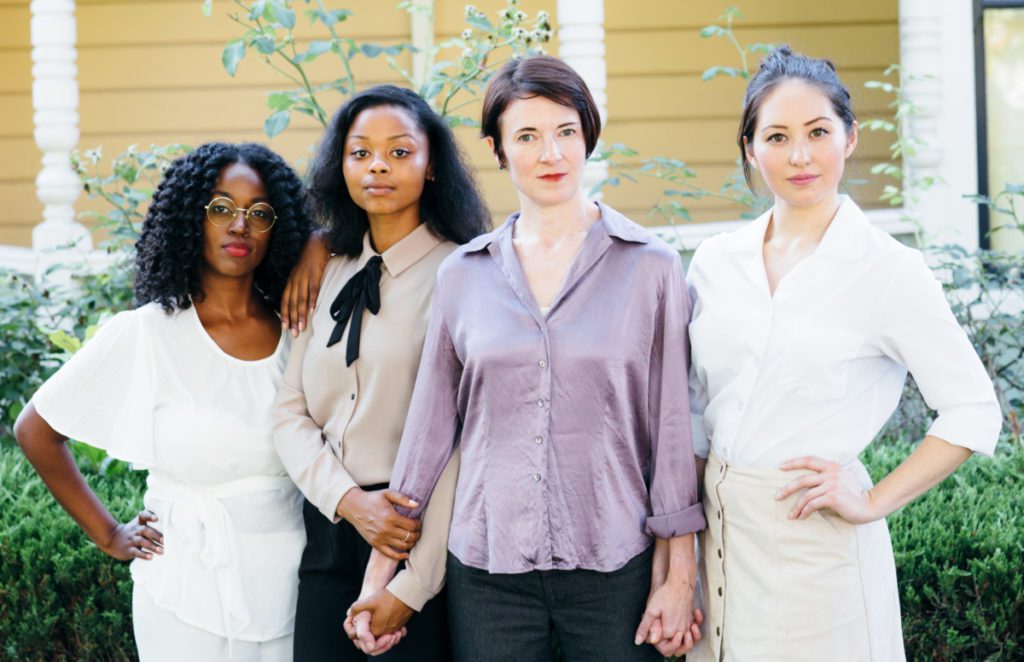
Pictured l-r: Wendy Waddell, Monique Gaffney, Chris Buess and Jo Anne Glover.
Photo credit: Henzel Design.
Pictured l-r: Monique Gaffney and Wendy Waddell. Photo credit: Henzel Design.
Photo Photo

Pictured l-r: Jo Anne Glover and Chris Buess. Photo credit: Henzel Design.

Pictured l-r: Jo Anne Glover and Chris Buess. Photo credit: Henzel Design.
Photo Photo
Pictured l-r: Jo Anne Glover and Chris Buess. Photo credit: Coast Highway Photography. Pictured l-r: Fred Harlow and Lisel Gorell-Getz. Photo credit: Coast Highway Photography.
Photo Photo
Pictured: Wendy Waddell. Photo credit: Coast Highway Photography. Pictured: Monique Gaffney. Photo credit: Coast Highway Photography.
Photo  

Pictured: Leigh Scarritt. Photo credit: Coast Highway Photography.


Reviews

San Diego Jewish Journal
April 2008 Feature Story
THE JEW IN THE CLOSET
Playwright Zsa Zsa Gershick knows all about living life in the shadows
By Pat Launer

She was 13 before she knew she was Jewish. She even attended Catholic school. “Both my parents came from a place where you palmed yourself off as a shiksa or shegetz,” says playwright Zsa Zsa Gershick. “My mother’s mother told her, ‘Don’t ever mention that you’re a Jew. Pretend you’re Catholic, or you won’t get a house or a job.’”

Gershick, whose name comes from her father’s Hungarian background – and his admiration for Zsa Zsa Gabor – was born in Oakland and grew up in nearby Alameda. “My family was so assimilated, they had no trouble sending me to Catholic school; it was the best school in the area.”

But when she turned 13, her mother took her to Israel on vacation and “came out.” Not as a lesbian, which Gershick later did, but as a Jew. “Having been denied my Judaism,” says the buzz-cut, bespectacled, suit-wearing Gershick, “I dived into it, studied Hebrew, the culture, everything.

“The very schizophrenic thing about my household,” declares the smart and funny writer, “is that everything in the house – the language, the gestures, the temperament – were all very Jewish, without any overt acknowledgment. After my mother came out, there was a new openness and embrace of our Judaism.”

Gershick is all about embracing who you are. She’s won awards for her forthright writing. “Secret Service: Untold Stories of Lesbians in the Military” won ForeWord Magazine’s Best Gay & Lesbian Book of the Year in 2006. She garnered the same prize in 1999 for “Gay Old Girls,” which also won the American Library Association’s Best Gay & Lesbian Book Award. Her short fiction has been published in the “Best Lesbian Love Stories” anthologies of 2003 and 2004.

In 2006, she premiered her first major play, Bluebonnet Court, currently having its second full-scale production at Diversionary Theatre (through April 13). When it first opened in Hollywood, the comic drama won two NAACP Theatre Awards and the GLAAD (Gay & Lesbian Alliance Against Defamation) Media Award for Outstanding Los Angeles Theatre.

Set in a small Texas town in 1944, the play deals with sexual tensions, civil rights, anti-Semitism and the fantasy of Hollywood contrasted with the reality of life at a seedy motel, as war rages abroad.

“The play gives us real insight into a time when Jews changed their last names, Blacks were expected to know their place, and there was no such thing as a ‘gay community,’” says acclaimed local director Delicia Turner Sonnenberg, who helms the Diversionary production.

“Working on the play,” Sonnenberg continues, “I have come to love the characters and their humanity. They’re products of their race and class, but long for something more. There’s an interracial lesbian romance at a time when that was a very dangerous thing. It’s a painful struggle to pass for someone you’re not, to need what the outside world says you can’t have, to have your country fight the evil of the Nazis in Europe, but deny your basic human rights at home. It’s a very funny and sensual play, but it’s about real people with real needs and real human struggles.”

Gershick knows all about these struggles. In her current home in North Hollywood, where she lives with her wife/producing partner, Elissa Barrett, “the original 1941 deed says ‘No Negroes or Jews.’” She lived for five years in Texas, where “everyone is very quiet about their Jewishness. The shul had services on Sundays instead of Saturdays, so they didn’t stand out. In my family, my father was very assimilated as a Jew – and he was also a closeted gay man. But he never let anyone know.”

Gershick came out in her late teens, and marked the event dramatically.

“I thought joining the army was the most daring, most adventurous thing a Nice Jewish Girl could do, the last thing you’d expect.”

She enlisted at 18, and went to Ft. Jackson, SC. “I was the only Jew,” she recalls, “and I was terrified of being a Jew in the South.”

Of course, she represented another minority, too.

“I’m quite certain I looked like a ‘baby dyke,’ but I’m sure they thought I was merely a tomboy.”

This was the post-Vietnam era, 1978, and military women had the same basic combat training as men.

“A lot of the women and men dropped out. It’s an endurance test. But I stuck with it – learning weaponry, how to assemble and disassemble an M16, throw grenades and set landmines. These things terrified me.”

But she endured; her contract for the Reserves lasted until 1983. Since she’d always wanted to write, she enrolled in the U.S. Army Defense Information School (DINFO) Broadcast Journalist Course at Ft. Benjamin Harrison, IN.

“I’m still on their website,” she says with a laugh. “I’m listed as one of their ‘Illustrious DINFOs.’ That’s ironic, because as an out gay woman, I couldn’t even serve in the Army!”

That reality led her to write “Secret Service,” about the military’s ‘Don’t Ask/Don’t Tell’ policy. “Before that Federal Law,” she explains, “you had to prove you’re gay. Now, you have to prove you’re not.”

Gershick went on to receive a Journalism degree from Antioch University, a Masters in Professional Writing from USC, and an MFA in Playwriting at the USC School of Theatre, where she’s taught writing and playwriting. Along the way, her byline has appeared in Newsweek, the Advocate and the Texas Observer, among other publications.

When she was teaching at Austin Community College, she lived around the corner from a dilapidated motel called the Bluebonnet Court.

“It fascinated me,” Gershick admits. “It was all weedy and overgrown, there were motorcycles on the lawn. I was walking past and these characters jumped into my head. And they kept haunting me. They wanted me to tell their story.” She wrote Bluebonnet Court during her second year in the USC Playwriting program.

“Through various workshops – which were funded by initial seed money from Paul Newman and Joanne Woodward – I learned that the play appealed to all ages, black and white, Jews and gentiles, gays and straights.

“What makes it universal is that the characters are very human. They’re not perfect; they have dreams and they’ve made messes. There are no villains here, but no saints, either. All of them are in their own mitzrayim, that narrow place where there’s a challenge.

“What I learned, especially from my father, is that appearances can be deceiving. Here he was, with a beautiful wife, home and family. But inside, he was horribly tortured. Everyone in this play has an inner reality and an exterior presentation. Everyone is passing as something else. The question is whether or not we have the courage to be who we are.”

In the play, a closeted gay/Jewish journalist gets stranded in Texas on her way to California at the Bluebonnet Court, with its desperately unhappy owner and her perpetually-inebriated, war-vet husband; their outwardly deferential, inwardly empowered black chambermaid; and the town’s “hostess,” whom the script describes as “a cheery librarian by day, needful tramp by night.” When these folks come together, masks are removed and secrets are revealed, with comic – and tragic – effects.

“My personal mission is to educate, uplift, entertain and inspire,” declares Gershick. “Everything I do, I ask myself, ‘Will this serve my mission?’ I want particularly to illuminate the lives of LGBT folks. We’ve largely been hidden from history. I want audiences to laugh, to learn, to have a good time, and to think a little about the ties that bind us all.”

Bluebonnet Court” runs through April 13 at Diversionary Theatre, 4545 Park Boulevard; San Diego 92116; 619-220-0097; diversionary.org.

For feedback, contact editor@sdjewishjournal.com.


San Diego Union-Tribune CRITICS CHOICE
Night & Day Section - ON STAGE
The ball was in her 'Court'
By James Hebert
ARTS WRITER
March 20, 2008

Last time she saw Bluebonnet Court, it had weeds on the walkways and “chopped hogs on the lawn,” Zsa Zsa Gershick recalls.

But tricked-out Harleys were hardly part of the vivid vision that inspired Gershick (eventually) to turn the place into a play – a 1940s-set romance whose local premiere is co-staged by Diversionary Theatre and Moxie Theatre starting this week.

Gershick was living in Texas back in the early 1990s, teaching at Austin Community College. She had an apartment just around the corner from the Bluebonnet, a derelict, 1920s-vintage motor court that she would pass by frequently.

“And one day these characters just jumped out at me. For a moment, I could see the Bluebonnet as it was, in its heyday.”

That heyday, in her head, was the 1940s – wartime America, the era of big bands, Hollywood golden girls, gossip queens and manly men. What resulted was a play steeped in those motifs – and in the realities they sometimes masked.

“Bluebonnet Court,” directed here by Delicia Turner Sonnenberg, follows the story of Helen, a “sob sister” columnist for the Hearst newspapers whose Jewish heritage is not the only matter of personal identity she's trying to keep under wraps.

Heading for Hollywood to make a new life with her big-screen squeeze, she gets stuck in Austin, and spends a few life-changing days amid the intrigue of the Bluebonnet and its occupants.

Though its period setting brings a vintage richness to the play, “It's not that I chose that era in a self-conscious way,” Gershick says. “The characters chose it. They seemed to come from that era, so I just went with them.”

But it's easy to see why Gershick would respond to the allure of that time. She grew up with a mother and father who were much older than her peers' parents – her dad was already in his 40s when World War II rolled around – so her whole upbringing was, in a sense, a period piece.

“The conversations I heard, the music I listened to, the movies we watched were all from that earlier time,” she says. “So, I had a foot in the present day – I grew up in the '60s and '70s – but also I had an awareness of decades past. Particularly World War II, which was an important and life-changing time for my parents.

“That period was already alive for me. So, when these characters presented themselves, I didn't say, 'Oh no, what am I gonna do?' ”

She also had some direct insight into the war aspect of her story (one of the characters in “Bluebonnet” is a troubled combat hero); Gershick spent five years in the Army Reserve, training as a journalist and a medic. She later wrote the book “Secret Service: Untold Stories of Lesbians in the Military.”

As restrictive a place as the military still can be for gay people, in the 1940s its mindset – that of society at large, actually – was something like “Don't ask, don't tell, don't even whisper it.”

As Gershick instructs in script notes for “Bluebonnet,” which premiered in L.A. two years ago, the play's cast “must understand that the idea of an empowered, autonomous, broad gay 'community' did not yet exist,” and that a sense of personal danger should inform the gay characters.

Or, as Helen is told before she hits the road: “There's a lot of places 'tween here and there won't be too pleased to see you.”

Chopped hogs might have taken the place of Studebakers at the Bluebonnet since then, but some things haven't changed completely.


Curtain Calls
By Pat Launer
www.sdtheatrescene.com
March 28, 2008

Girls Just Wanna Have Fun

THE SHOW: Bluebonnet Court, a 2006 dramedy by Zsa Zsa Gershick, which won two NAACP Theatre Awards and the GLAAD (Gay & Lesbian Alliance Against Defamation) Media Award for Outstanding Los Angeles Theatre when it premiered in L.A.

THE STORY/THE BACKSTORY: There actually was a Bluebonnet Court in Austin, where Gershick lived in the 1990s. It was weedy and seedy, dilapidated and overgrown, and it inspired her to write the play, which is set in Texas in 1944, against a backdrop of the war and Hollywood’s heyday (with its many closeted stars). Gershick introduces thorny themes such as homophobia and hidden love, heroism, racism and anti-Semitism. Rife with rich characters and their deep secrets, the play deals with sexual tensions, civil rights, anti-Semitism and the disturbing disconnect of a country defending the rights of victims overseas, while denying basic human rights at home.

Hearst papers “sob sister” Helen Burke (nee Berkowitz) is on her way to meet her Hollywood paramour, who snagged her a screenwriting job. Outside Austin, she swerves to avoid a deer, and smashes up her car. Waiting for repairs, she winds up stranded for awhile at the Blue Bonnet Court, a run-down motor inn that’s hurting for business, and harboring a lot more hurt than that. Owner/manager Lila Jean is all iced-tea-serving, movie-loving Southern hospitality, but underneath, she’s seething with discontent and frustration. Her husband, Roy Glenn, hasn’t been quite right since he came home from the war. He veers between drunken stupors and haunting nightmares, during which he calls out the name of Lila Jean’s twin brother. Orla Mae is their African American chambermaid, who “Yes Ma’ams” on the outside, but harbors hidden hopes and dreams, her steely self-respect and determined self-education drowning in obligatory racial subservience. Nanalu is the town “hostess,” whom the script describes as “a cheery librarian by day, needful tramp by night.” Secrets are revealed, taboos crumble and huge chances are taken when Helen stumbles into this tangled web, flaunting her liberal views of sex and race, and forcing everyone to face long-hidden truths. Along the way, there’s comedy (particularly in the form of radio broadcasts that comment on the action, from Hollywood hearsay to evangelical hypocrisies), as well as love, acceptance, even death.

THE PLAYERS/THE PRODUCTION: Ace director Delicia Turner Sonnenberg has assembled a stellar ensemble, who dig deep into these believably flawed characters and make them flesh and blood. Gershick’s dialogue is expert, from the tough-talking, Yiddish-laced New Yorkisms of Helen (excellent Wendy Waddell, both severe and vulnerable -- with a few dialect adjustments needed) to the Southernisms of Lila Jean (wonderful Jo Ann Glover, always thoroughly credible, a Texas native comes by her accent naturally). As the submissive Orla Mae, Monique Gaffney shows her inner strength, acting deferential and silent, but speaking volumes with her eyes, facial expressions and body language. Christopher Buess does his best work ever as the tormented, closeted bigot, Roy Glenn. And Leigh Scarritt takes a little star-turn as Nanalu who, like the country, coasts along in a double life, until disaster strikes. Lisel Gorell-Getz and Fred Harlow have a field-day with their multiple accents, outfits and characters in the periodic and pointed ‘radio spots.’

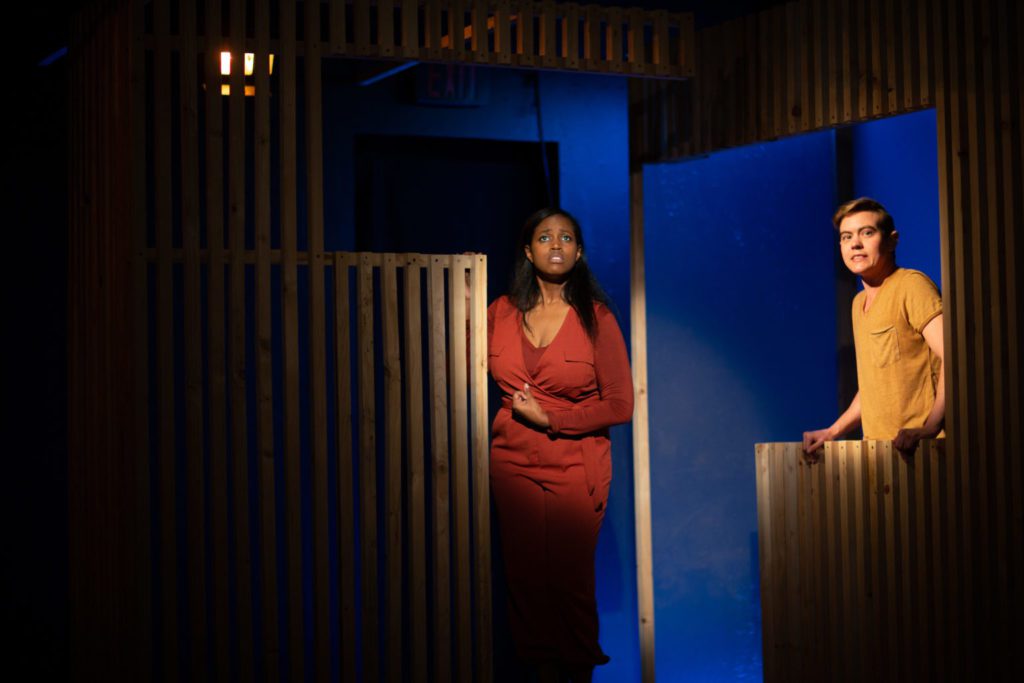
The set, which was designed by Joel David for the original L.A. production (adapted to the Diversionary stage by Bret Young and Delicia Turner Sonnenberg), is one of the best ever in the small theater. It has the shambled look of a run-down motel, all weathered wood, with slamming screen doors and little front porches. The lighting (Mia Bane Jacobs and Jason Bieber) and sound (Rachel Le Vine) add color and depth to the Southern hothouse atmosphere. Jennifer Brawn Gittings’ costumes aptly capture character and era. Missy Bradstreet deserves a special nod for her hair and makeup work; that shiner on Buess and the bloodied face of Scarritt look remarkably real.

There are so many layers here, in the issues and the characters, the production warrants multiple viewings. And it will undoubtedly only get stronger and deeper over time. Don’t miss it.

THE LOCATION: Moxie and Diversionary… at Diversionary Theatre, through April 13

BOTTOM LINE: Best Bet


NewsBlaze
March 25, 2008
The Bluebonnet Court Austin, Texas Finest
By Robert Hitchcox

If you traveled in the States prior to the 60s, you probably stayed at small roadside motel quite similar to the Bluebonnet Court. If it had a neon sign, it wasn't working properly. You could pull your car up next to your cabin. You may have even met a Lila Jean Webb or Roy Glen Webb. Welcome to playwright Zsa Zsa Gershick's Austin, Texas, circa spring of 1944.

Helen Burke (Wendy Waddell), New Yorker, Jewish, young, and attractive, has met car trouble. She's stuck in one of the units of the Bluebonnet Court. Lila Jean (Jo Anne Glover) runs the motel. She is also trying to keep her damaged war vet husband, Roy Glenn (Christopher Buess), from going over the edge and staying constantly drunk.

Helen has entered a twilight zone. Roy Glen is mentally battered from the war, he's a racist, anti-Semitic, and can't even relate to his wife except through anger and physical abuse. Lila Jean is the perfect Texas hostess filled with southern hospitality and a gracious smile, all of which are hiding the pain of an uncaring damaged husband and the desire for just a smidgen of love.

Playwright Gershick fearlessly creates characters that are examining their own sexuality, examining their relationship to race and ethnicity, and experiencing the vast cultural differences created by geography and color. She contrasts clipped New York speak with Texas drawl, Yiddish with southern slang, northern ethos with southern and black ethos, and so much more. The clash of cultures is fascinating to watch unfold on Diversionary's stage.

The motel maid, Orla Mae Bird (Monique Gaffney) is the proper black servant, saying nothing, always doing the bidding of her employer. She is so much more. She is self-educated, well-read, and interested in more than backwater Austin has to offer. There is also electricity between her and Helen. The contrast is astounding and it is lovely. Gaffney portrays to two sides of Orla Mae to perfection.

Leigh Scarritt plays the tragic Nanalu Branch. Nanalu plays life fast and loose. She boldly goes where disaster is sure to happen. A friend of Orla Mae, they advise each other. Nanalu doesn't abide by good advice. She is a sight in her high, high heels and a drunken state.

The playwright offers a wonderful contrasting commentary, usually relegated to a sound track . . . live radio. Lisa Gorell-Getz and Fred Harlow provide on-onstage radio commentary as the actors search the dial for radio solace. They are pitch artists, radio preachers, storytellers, and much more. This delightful artifice works well. Preshow and intermission offers canned radio from the period - a nice touch.

While a serious drama, there are many hilarious scenes. Director Delicia Turner Sonnenberg cast well and directed with just the right touch. Each of the cast knew their character well. Waddell, with the most subtle role, created a persona that we could easily relate to. After all her character was in an alien nation. Blue Bonnet Court deftly the explores some explosive issues. This is a production well worth your serious consideration. Don't miss it.

Running Time: 117 minutes with a 15-minute intermission
Robert Hitchcox is a playwright, critic and fiction author.
Copyright © 2008, NewsBlaze, Daily News


www.sandiego.com
San Diego Arts
'Blue Bonnet Court' by Moxie & Diversionary Theatre
Come in and stay a while
By JenniferChung Klam
Posted on Mar 25 2008

A cicada stays underground until ready to emerge, with some species doing the subterranean thing for up to 17 years. It’s a fitting metaphor for Orla Mae, a black lesbian living in the stifling atmosphere of Austin, Texas in 1944.

The cicada “doesn’t harm anything, but everything wants to eat it,” she says.

It’s an unforgiving time if you’re not part of white America. Or rather, straight, white America.

Make that straight, white, gentile America.

Better to stay underground.

Which is pretty much what Orla Mae’s been doing at the start of Zsa Zsa Gershick’s 2006 play, “Blue Bonnet Court.”

Orla Mae works at the titular shabby motor hotel, where she keeps her head down and quietly takes orders from the chatty and ignorantly racist proprietress. Lila Jean busies herself with running the nearly empty hotel and tending to her drunk, racist husband, who has recently returned, shellshocked, from military duty.

But nothing’s as simple as it seems at the Blue Bonnet Court. Wisecracking, fast-talking New York reporter Helen Burke (who’s actually a Berkowitz) soon finds that out when she crashes her car and gets unexpectedly stranded in the middle of this ostensibly redneck heartland stereotype.

Likewise, there’s a lot going on beneath the surface in Gershick’s award-winning dramedy, gracefully presented by Moxie Theatre and Diversionary Theatre in its second full-length production. The story tackles complex issues of race, gender, politics and the search for fellowship with much humor and genuine heart.

The outstanding ensemble is led by Wendy Waddell as Helen and Monique Gaffney as Orla Mae, gently, irresistibly falling into each other’s orbits. Waddell’s no-nonsense straight-shooter has a tough exterior built up from years of disappointments that can, finally, only be pierced by Orla Mae. Gaffney gives an understated performance, infusing Orla Mae with strength and pride, even as she suffers the daily indignities of being treated as a second-class citizen, separate but certainly not equal. What the lovers crave more than anything is to find and be finally accepted by “others like us.”

Jo Anne Glover is all smiles and southern charm as the hotel proprietress, barely hiding her pain beneath a brittle veneer. Emotionally and physically starved, Lila Jean is also desperately drawn to the stranger in town. Her damaged husband is played by Christopher Buess, and Leigh Scarritt plays one hot librarian -- also not what she seems -- who single-handedly keeps up morale for the boys in uniform.

Gershick pokes fun at the waning Golden Age of Hollywood and radio, and Moxie artistic director Delicia Turner Sonnenberg makes the most of these scenes with campy humor. Funny lady Lisel Gorell-Getz and multi-voiced Fred Harlow easily transition between a number of larger-than-life silver screen and radio personalities.

The humor mostly hits, though for all the play’s one-liners -- “Faygeleh? It’s Yiddish for … actor” -- it probably needs a cast this good to deliver them. The emotional punches land square, too, especially in Scarritt’s bold portrayal of her tragic character.

The production’s artistic crew got all the details right, from the original set design by Joel Daavid (adapted by Bret Young and Sonnenberg) to Jennifer Brawn Gittings’ beautifully period costumes, and the mood-soaked lighting by Mia Bane Jacobs and Jason Bieber. Rachel Le Vine’s sound design includes scratchy radio programs and the atmospheric sounds of those cicadas.

The harmless cicada’s survival depends on sheer numbers -- in the summertime, the creatures surface en masse, overwhelming their predators and singing their song in unison.

For the civil rights movement that would soon get underway, and the gay rights movement on its heels, it’s an apt metaphor, indeed
About the author: Jennifer Chung Klam is an editor at The Daily Transcript and a freelance arts and culture writer.


San Diego Reader
March 27, 2008
Bluebonnet Court
by Jeff Smith

Whether, as a radio ad says, they're the "Yellow Rose of Texas, or one of God's plainer flowers," everyone in Zsa Zsa Gershick's dramedy is living a double life. Austin, Texas, in the spring of 1944, punishes non-traditional preferences. War rages in Europe, and hate sears the Lone Star hill country where, when her car breaks, down, Helen Burke becomes stranded. She's a writer (did an advice column for Hearst, now's headed for Hollywood). She's also Jewish and a lesbian. She learns that the Webbs, who own the motor lodge (where scorpions nap in empty shoes), their African-American employee Orla Mae, and Nanalu Branch, the local librarian, have been stranded all their lives. They're caught between the ideal, glamorized on radio and in movie mags, and closeted choices. In the middle, they've created false, but life-preserving identities. Though the comedy at times upstages the drama (the jokes are so funny, their absence lulls the pace), and though the ending's more a wish than a possibility in 1944, it's clear to see why Blue Bonnet's won several awards. The Moxie-Diversionary Theatre co-production gets the play's grit and its hope. Her hair swirling like twin tornados, Wendy Waddell exudes Helen's crack-wise attitude. Monique Gaffney's Orla Mae says little, speaks volumes about racial barriers. Jo Anne Glover, Christopher Buess, and Leigh Scarrit play moving variations on the theme of pain. For contrast, Lisel Gorrell-Getz and Fred Harlow etch unreal, often screamingly funny radio personalities (Harlow, in fact, must play half of Austin, from the compassionate to the cutthroat). Jennifer Brawn Gittings's costumes evoke the period with precision.

Worth a try.


North County Times
Taboos shattered in well-staged 'Bluebonnet Court'
By PAM KRAGEN - Staff Writer | Wednesday, March 26, 2008

Blue Bonnet Court may not look like much from the outside, but inside the weather-beaten walls of this Texas roadside motel thrives a veritable petri dish of racial, sexual and religious taboos.

In its well-directed San Diego premiere, co-produced by Diversionary and Moxie Theatres, Zsa Zsa Gershick's World War II-era comedy-drama "Bluebonnet Court" (yes, the play name combines the words Blue and Bonnet) packs a motherlode of hot-button issues into its compact script. While it strains credulity that religious bigotry, homosexuality, racism, alcoholism, rape and suicide can all crop up at Blue Bonnet Court in the few days it takes to repair a car bumper, Delicia Turner Sonnenberg's sensitive direction, nuanced performances by the cast and Gershick's ear for regional dialects and quirky humor ease the ride.

Set in Austin in 1944, the play begins when Helen Burke ---- a crusty, traveling correspondent for the New York Herald-Tribune ---- arrives on the steps of Blue Bonnet Court, suitcase and typewriter in hand, after her car crashes into a tree. Times are tough, so innkeeper Lila Jean Webb is happy for the business, even if her hard-drinking war veteran husband, Roy Glenn, finds Helen's Jewish heritage and distinctly male attire off-putting.

Helen is heading west to Hollywood where her secret lover ---- a heavily peroxided femme-fatale film star ---- has secured for her a studio screenwriting job. Before the play is done, Helen's girlfriend, Laura, will be pushed into a sham marriage with a gay matinee idol by the publicity-fearing studio bosses, and Helen will find unexpected love of her own at Blue Bonnet Court in the arms of Orla Mae Bird, a reserved but book-smart black maid who longs to escape the segregated confines of south central Texas.

Meanwhile, Roy Glenn drinks to forget the young German soldiers he slaughtered in North Africa and the homosexual tendencies he struggles against with little success. And faced with her husband's often-violent indifference, the lonely, desperate Lila Jean turns to Helen for affection. If those aren't enough plot twists for you, there's Nanalu Branch, the slutty town librarian who passes for white, but whose black roots show when she's liquored up after a night out on the town with the local soldier boys.

All five residents of Blue Bonnet Court are hiding secrets, and each will be transformed ---- some believably, some not so much ---- in the course of the two-hour, 15-minute play.

Gershick's gift is in writing well-rounded characters who speak in colorful styles ---- Helen with the Yiddish slang of her Manhattan upbringing; Nanalu with the boozy, bluesy rhythms of her native St. Louis; and Lila Jean with the clipped-but-courteous conservatism of Bible Belt Texas. Sprinkled liberally throughout are comic nuggets of nostalgia in the form of live radio broadcasts (serials, commercials, war reports and fire-and-brimstone preachers) and film scenes (starring Helen's film vixen ex). The oddball radio bits, Joel Daavid's sandblasted motor inn set, Mia Bane Jacobs and Jason Bieber's golden patina lighting, and Jennifer Brawn Gittings' apt period costumes bring an antiquated realism to the story.

Sonnenberg directs her strong cast with attention to character, personality, period and detail. She softens some of the script's wrinkles ---- for example, how did this little motel become such a Peyton Place? Why does Helen cheat on her lover so readily, and recover from her loss so quickly? And how can Roy Glenn go from a violent, self-loathing drunk homosexual to a chipper, obedient, sober husband practically overnight?

Wendy Waddell leads the cast in an understated and honest performance as Helen, the tough-skinned but tender-hearted reporter who's comfortable in her own skin as a Jewish lesbian. Monique Gaffney speaks volumes with silences and body language as the wise, wistful Orla Mae. Jo Anne Glover paints magnolia softness over the brittle disappointment of Lila Jean. Leigh Scarrit packs scene-stealing thunder into her strange, mournful turn as the ill-fated Nanalu. And Christopher Buess has the perfect period look and finely detailed features for Roy Glenn, who talks tough but keeps a sketchbook of the nude young men he spies swimming at the local lake.

Lisel Gorell-Getz and Fred Harlow complete the cast in a rich variety of roles as radio and film characters (though their constant runs on and offstage with the microphone could be staged with less distraction).

For a play so rife with gay and sexual themes, "Bluebonnet Court" is on the tame side, dealing subtly with most situations in the same whispered, winking way they would have been handled in the 1940s. Unexpected turns of plot and a generous slice of humor make a stop at this Texas motel a pleasant diversion for anyone motoring through San Diego's theater scene this month.